 Book now
 What the Schindler's Factory Exhibition Actually Covers
It is not the 'Schindler's List museum' — an honest account of what 'Kraków under Nazi Occupation 1939–1945' shows, and why that matters before you go.
Many visitors arrive expecting a museum about the film Schindler's List, or a straightforward biography of Oskar Schindler. Neither is quite right, and the museum itself does not present it that way. The permanent exhibition, titled "Kraków under Nazi Occupation 1939–1945," is the story of a city, told through the building where one especially significant act of protection took place. Understanding that distinction before you go changes the visit for the better — this guide sets out honestly what you will and won't find inside.
The exhibition's real subject
Opened in 2007, the permanent exhibition uses the factory's surviving administrative building as a doorway into the wider experience of Kraków under German occupation — the 1939 invasion, the creation and liquidation of the ghetto across the river in Podgórze, daily life under occupation, resistance, denunciation, deportation and terror. It is arranged as a sequence of reconstructed spaces — a ghetto apartment, wartime streets, period rooms — combined with photographs, documents, recorded testimony and objects, rather than as a conventional chronological hang of display cases.
Schindler is present throughout, and his preserved office — with the desk associated with the exhibition and a memorial made of enamel pots bearing the names of the workers he employed — is one of the museum's most visited spaces. But it sits inside the larger occupation narrative rather than standing apart from it. Visitors who come expecting ninety minutes about one man's story often find themselves moved by something broader instead.
The factory's own history, before Schindler
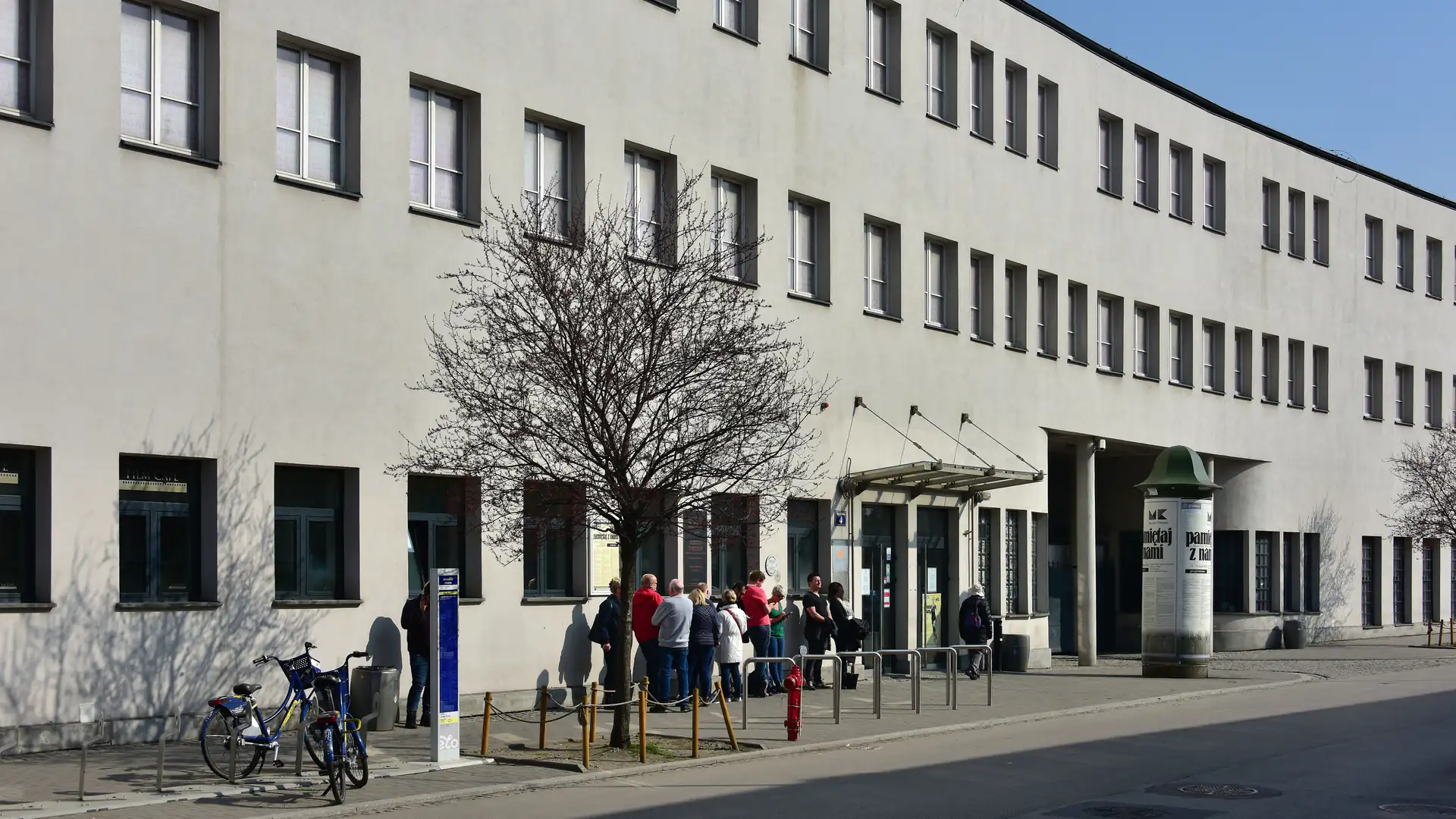
The building itself predates the story most visitors know. It opened in 1937 as an enamelware works called Rekord, founded by Jewish entrepreneurs, before German trusteeship and Oskar Schindler's takeover of the factory in November 1939 led to its renaming as Deutsche Emailwarenfabrik in January 1940. The exhibition doesn't skip this — it grounds Schindler's story in the concrete, industrial reality of an occupied city's economy, where control of businesses like this one was itself an instrument of persecution.
By 1944, around 1,100 Jewish workers were employed at the factory, and for a period a subcamp of the nearby Płaszów forced-labour camp operated on the site. The exhibition treats this as part of the fabric of occupied Kraków, not as a self-contained heroic episode — which is precisely why it reads differently to visitors who expect a film's version of events.
What is not on display
This is not a museum built around film memorabilia, and there is no reconstruction of a Hollywood set to walk through. Some material connected to the story and to Schindler's own office exists, but the museum's purpose is historical documentation, not a tribute to the 1993 film. Visitors specifically hoping for a movie-themed experience are sometimes surprised by how serious and unadorned the presentation is.
It is also worth knowing that a temporary exhibition programme runs alongside the permanent one and changes periodically — currently addressing related themes such as children's experiences of war — so what's on display beyond the core permanent exhibition can shift between visits.
Why this framing matters for your visit
Setting your expectations correctly before you arrive is, in our experience, the single biggest factor in how much a visit here means to someone. Visitors who arrive knowing this is a serious history of an occupied city — not a film tie-in — consistently describe the exhibition as one of the most powerful things they saw in Poland. Visitors who arrive with the wrong expectation sometimes spend the first twenty minutes disoriented before the exhibition's actual scope becomes clear.
We send a short, honest orientation note to everyone who books, precisely so nobody walks in cold. There's no marketing spin to apply here — the museum's own framing, and the history itself, is compelling enough without it.
Frequently asked
Is this the 'Schindler's List museum'?
It's the real building at the centre of that story, but the exhibition inside is not built around the film. Its subject is Kraków under Nazi occupation from 1939 to 1945, with Schindler's office as one significant part of a larger narrative.
Will I see film props or memorabilia?
Some material connects to the story and to Schindler's office space, but this is a serious historical exhibition, not a film-themed attraction.
Is it mostly about Oskar Schindler personally?
No. He is a central and important thread, but the permanent exhibition covers the whole city's wartime experience — the ghetto, daily life, resistance and terror — not a single biography.
What was the building before Schindler ran it?
An enamelware factory called Rekord, founded in 1937 by Jewish entrepreneurs, before German trusteeship placed it under Schindler's control from late 1939.
Does the exhibition change over time?
The permanent exhibition is stable, but a temporary exhibition programme runs alongside it and changes periodically — check current listings closer to your visit.